In 1990, IBM was the second-most-profitable company in the world and was poised for another decade of dominance. Yet deep structural cracks were starting to appear that would soon split open.
Between 1991 and 1993, IBM would lose a staggering $16 billion. At the heart of the company’s decline were knowledge siloes.
The tech giant had splintered into 20 separate business units, each operating in isolation. It ran 125 separate data centers, employed 128 CIOs, and maintained 31 private networks–driving processing costs to three times the industry average. Engineers unknowingly designed identical components across different product lines, while teams reinvented solutions that already existed elsewhere.
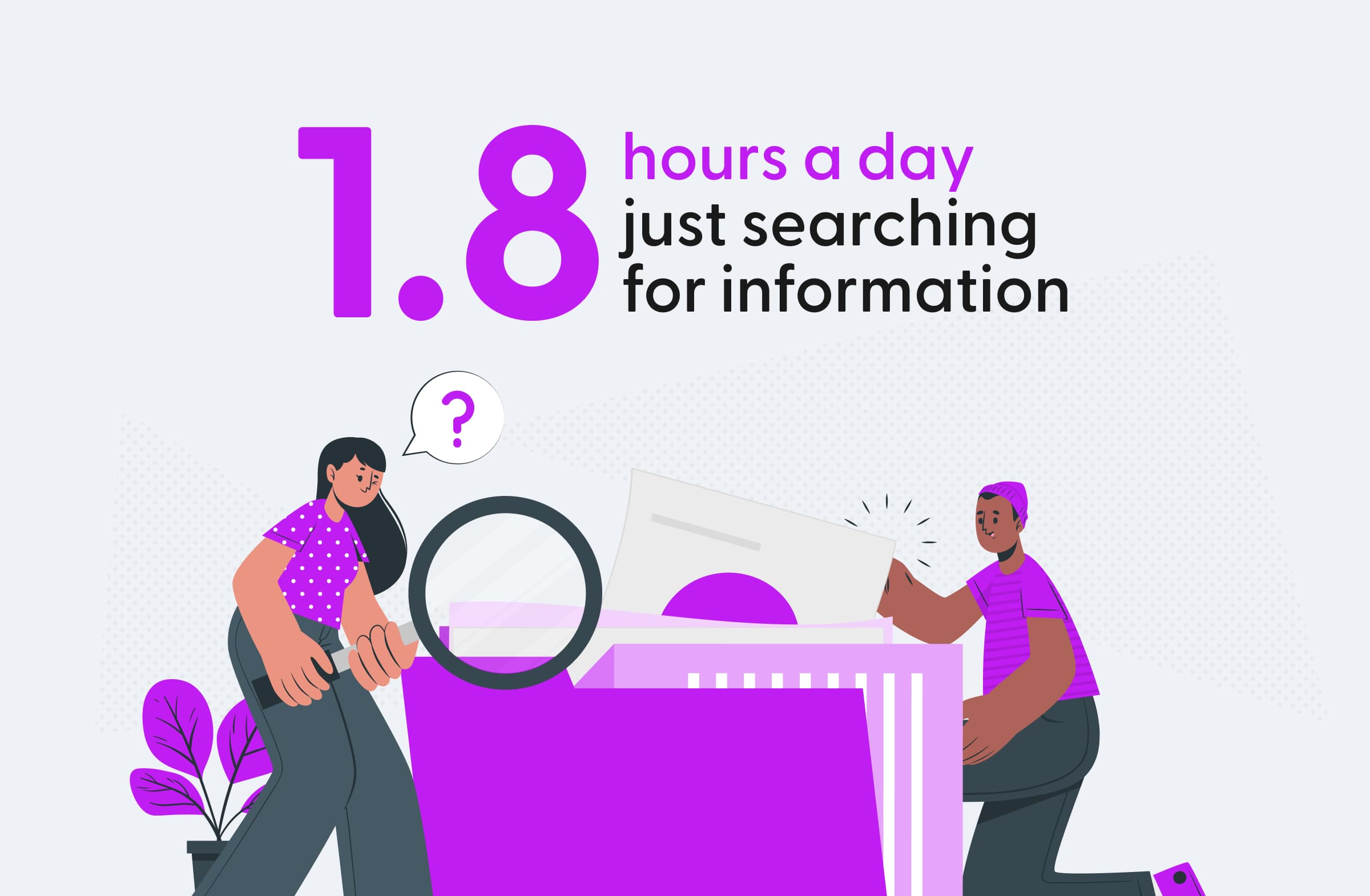
Companies today risk the same fate. When critical knowledge stays locked in departmental silos, teams duplicate work, miss opportunities, and watch projects stall. But today AI offers a powerful solution that IBM lacked in the 1990s. AI eliminates these barriers, ensuring teams get the right information precisely when they need it.
Applications of AI in Knowledge Management
Knowledge Creation
An estimated 60%-70% of enterprise data goes unused. What if organisations could unlock the insights buried in this information?
AI can analyse vast, scattered data in ways humans simply can't. Deep-learning models identify patterns, uncover hidden connections, and predict outcomes—transforming raw data into actionable intelligence.
For example, researchers applied deep learning to 3.3 million abstracts of materials science research articles published over 96 years. Not only did the algorithm independently map complex materials science concepts, including the periodic table’s structure, but it also identified new material correlations with promising applications.
This same approach applies to business: AI can surface hidden trends, anticipate risks, and drive smarter decisions.
Knowledge Retrieval
AI enhances knowledge retrieval in several ways:
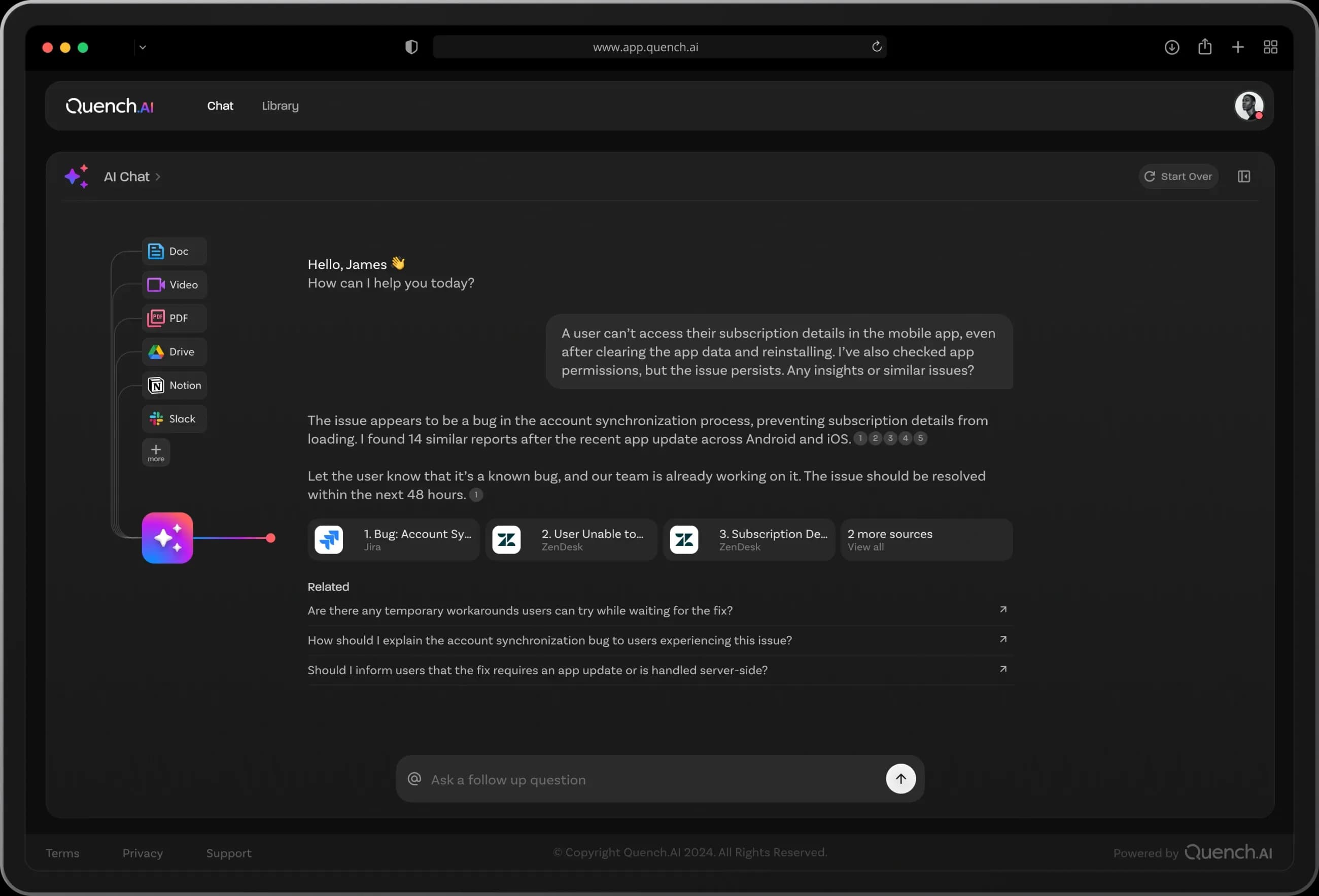
- Aggregates scattered data - AI pulls information from multiple sources at once, even across disconnected tools.
- Understands user intent - Unlike basic keyword searches, AI uses semantic search to interpret complex olloes-campaign360">People.ai launched Campaign360 to enable businesses to gain real-time insight into how marketing influences sales. By aligning teams with accurate data, AI strengthens collaboration and improves decision-making.
Finding and Closing Skills Gaps
Finding Skills Gaps
The workplace is evolving at an unprecedented pace due to technological shifts and almost 90% of companies worldwide report facing skills gaps. To identify missing workforce skills, companies are using AI to analyze employee data to measure skills proficiency and identify areas for improvement, a technique known as ‘skills inference’.
To boost digital expertise among 4,000 technologists, Johnson & Johnson used AI-driven skills inference in three steps:
- Skills Taxonomy: Identified 41 specific “future-ready” skills, such as master data management and robotic process automation.
- Skills Evidence: Selected the relevant employee data for analysis, including HR records, recruitment databases and learning management systems.
- Skills Assessment: Used a large language model to rate each employee’s skills proficiency on a 0-5 scale. The company also asked workers to self-assess themselves; if the two scores deviated by less than one point, the company considered the scores valid.
Closing Skills Gaps
At ollo, we take skills development further by turning company knowledge into real-world training scenarios. Our AI roleplay feature helps employees practice company-specific situations, receive instant feedback, and refine their decision making in a risk-free environment. Employees can personalize scenarios by setting roles, personalities, and objectives, ensuring training is relevant and engaging.

What are the limits of AI in Solving Knowledge Silos?
The Importance of Human Decision-Making
While AI excels at retrieving information and recognizing patterns, strategic decisions require nuanced human judgment. Humans bring critical capabilities that AI cannot replicate such as emotional intelligence, contextual understanding and ethical reasoning.
AI’s decision making algorithms are notoriously opaque which is why they are often termed as a "black box". In high-stakes fields such as healthcare, law, and finance, human oversight is essential to validate AI-generated recommendations to ensure compliance, accuracy, and ethical integrity.
Knowledge Gaps Around AI Innovation
While tech-driven firms have the resources to combine specific industry expertise with AI technical understanding, non-tech sectors often lack the in-house technical expertise to implement AI successfully.
Employee buy-in is just as critical as technical expertise. Many experienced professionals see AI automation as a threat to their roles and may prefer traditional methods they have mastered over years. To build a future-proof workforce, organisations also have to be prepared to invest heavily in training to upskill employees with new tools.
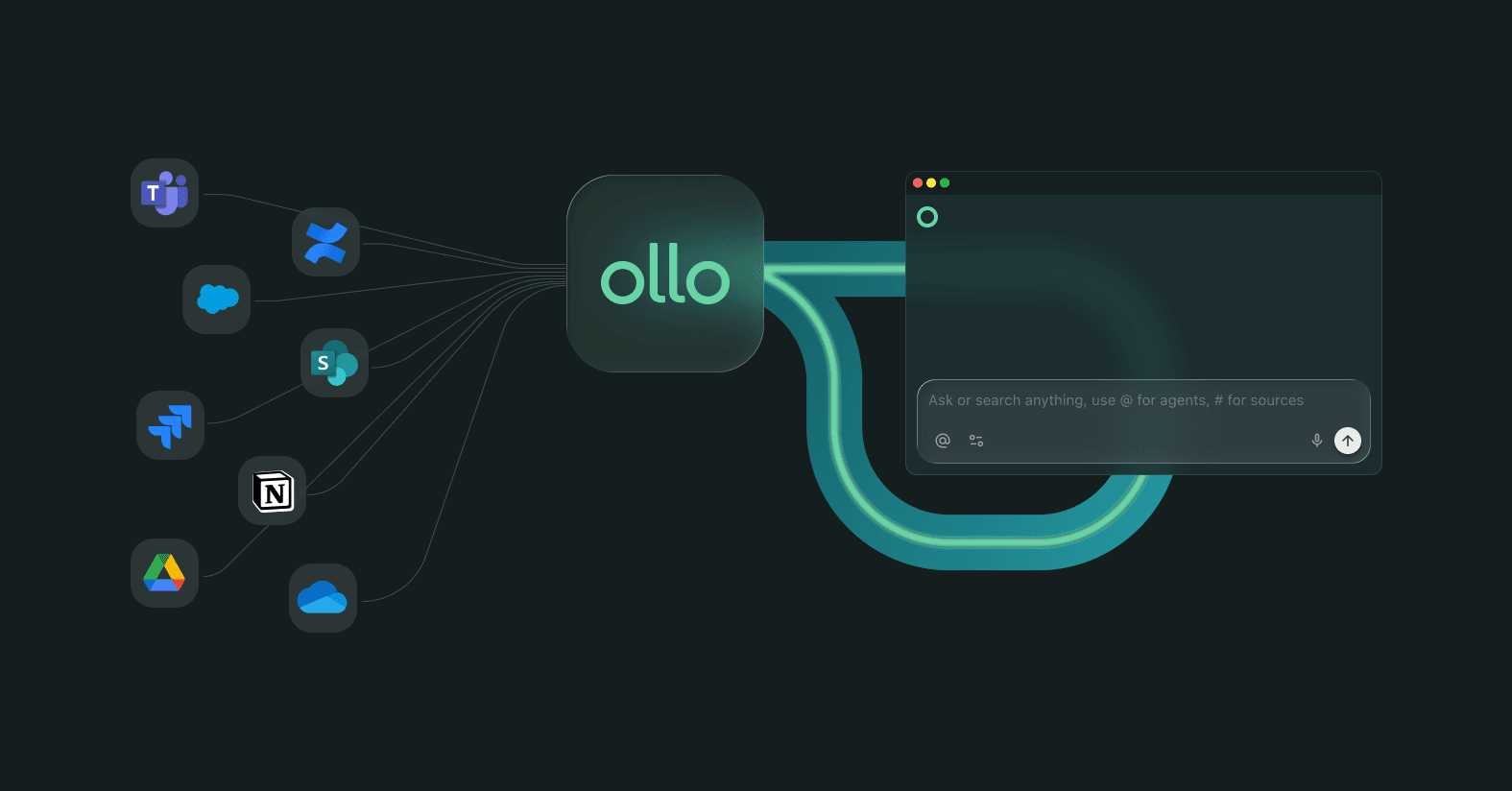
At ollo, we make this transition as seamless as possible by integrating AI into the tools teams already use such as Slack, Google Drive, Notion, and Microsoft Teams, through simple pre-built integrations or via API.
How to Successfully Adopt AI for Knowledge Management?
Only 10% of companies obtain significant financial benefits from artificial intelligence technologies. For AI deployment to be successful, there need to be an accompanying set of organizational changes.
One research study demonstrated that the value of AI lies not only in technology but in new infrastructures, trained people, and redesigned processes.

People
Train Knowledge Scientists
Knowledge scientists work alongside data scientists to build knowledge graphs which provide essential background context and improve transparency in AI decision-making. Their role is critical in fostering trust among stakeholders.
Seek AI Champions
AI champions help shift the narrative from job replacement to augmentation. With deep domain expertise and strong business and communication skills, they can demonstrate how AI enhances knowledge processes and human capabilities.
Foster AI Literacy
As AI takes over repetitive tasks, workers must learn to interact with intelligent systems. A BCG study describes two AI-integrated work models: Centaurs, who split tasks with AI to play to each other’s strengths, and Cyborgs, who weave AI more tightly into their daily workflows. The World Economic Forum ranks technological literacy among its top 5 skills on the rise.
Infrastructure
Prepare Data
High-quality data is essential as deep-learning models rely on vast training datasets to produce reliable results. To really benefit, organizations need to take clear steps to ensure data is properly cleaned and managed.
Develop Knowledge Graphs
A major challenge in using knowledge effectively is that data is constantly being created in real time, and much of it is unstructured. Knowledge graphs help solve this by organizing key concepts, terms, and relationships within a business. They create connections between data points, enabling better integration and analysis.Processes
Pursue Mutual Learning
AI is powerful but not perfect. To maximize its value, organizations must continuously audit AI decisions and keep human supervisors actively involved.Without proper oversight, AI can lead to two key mistakes:
- Errors of commission – acting on incorrect AI-generated suggestions.
- Errors of omission – failing to act because AI overlooked a critical insight.
Form Cross-Functional Teams to Redesign Workflows
Successful AI integration depends on close collaboration between technologists and domain experts. This process cannot be imposed entirely from the top down. Frontline knowledge workers, who are closest to daily operations, must have a voice in how AI integrates into their work.
Unlock the Power of AI-Driven Knowledge Management
AI is reshaping knowledge management by breaking down silos, streamlining information access, and enhancing collaboration. But success depends on more than just technology; it requires quality data, human oversight, and seamless integration into daily workflows.
At ollo, we help organisations unlock AI’s full potential. Our solutions integrate seamlessly with the tools teams already use, delivering instant access to knowledge.
We believe the future of knowledge management depends on balancing AI with human expertise. Companies that get this right will maintain a competitive edge in an increasingly data-driven world.